Let me guess. You have tried to build habits more times than you can count.
Every time it starts with real intention. You tell yourself this is the week you finally get consistent. You pick a routine. You line up the tools. And for a moment, it feels like maybe this time will be different.
Then a few days go by. Energy shifts. Focus drops. The habit quietly disappears.
When I hear this from clients, I always tell them the same thing. That experience does not mean you failed. It means the habit was never designed for how ADHD brains actually work.
Before we keep going, I want to make sure you are not just nodding along thinking, yeah that sounds like me. Grab this free ADHD friendly habit and productivity guide first. It will give you a clear starting point so you know where to begin.
Why Traditional Habit Advice Sounds Right but Rarely Works for ADHD Brains
Most habit advice assumes consistency comes from discipline. Just do it every day. Stay consistent. Push through resistance.
That advice makes sense on paper. It just does not hold up very well in real life with ADHD.
ADHD affects planning, time awareness, emotional regulation, and working memory. So when a habit system requires you to remember things at the right time, manage energy perfectly, and stay consistent no matter what else is happening, the system itself becomes exhausting. Sound familiar to anyone else?
This is also why so many people get stuck before they even start. Overthinking kicks in. Decision paralysis shows up. Momentum never gets off the ground. That is exactly why I often point people to The 2 Minute Drill That Melts ADHD Decision Paralysis when we are talking through habit struggles. When starting feels easier, habits stop feeling so intimidating.
The issue is not commitment to the habit – it is the cognitive load it requires to get it to the finish line. There have been many occasions where I have had plenty of time to get a thing done, but my brain battery feels completely depleted.
How ADHD Time Blindness Quietly Undermines Habits
Another thing that comes up constantly in these conversations is time blindness.
You fully intend to do the habit. You even think about it earlier in the day. Then suddenly it is evening and you are wondering where the time went. That is not a lack of effort. That is how ADHD brains experience time.
I talk about this often, including in Here’s How to Stop ADHD Time Blindness from Ruining Your Day, because once time becomes visible, habits become more realistic. Without external anchors, habits rely too heavily on memory and internal clocks that are unreliable for ADHD.
When habits depend on remembering at the right moment, they are fragile. When habits are tied to visible cues and anchors, the odds of them happening are much higher.
Why Big Goals Create Avoidance Instead of Progress When Building ADHD Habits
Big habits or goals sound motivating when you first write them down. They also create pressure, and tend to come with an “all or nothing” mindset. ADHD brains tend to dramaticize and catastrophize more than most.
For ADHD brains, pressure tends to increase avoidance. When a habit feels too big or too rigid, starting becomes the hardest part. That is why so many people stay stuck in planning mode, researching and preparing without ever taking action.
Smaller ADHD habits change that dynamic by reducing the feeling of friction.
A habit that takes two minutes feels safer to start. A habit that allows for flexibility feels forgiving. Restarting is not a failure. It is part of the process. I was reminded by a mentor recently that whenever we fall short of our intentions, we should treat ourselves like we would treat a baby who is learning to walk. Would we criticize them and tell them to give up? No way! Failing, stumbling, and falling are all part of the natural learning process!
This same idea shows up in the ADHD-friendly masterclass I created. In it, we walk through how momentum is built by lowering the bar at the beginning, rather than setting the bar too far out of reach. If you want to go deeper on these ideas, check out the free ADHD masterclass here.
What ADHD Friendly Habits Need to Actually Stick
Habits that work with ADHD must be designed differently.
My clients and I have found best chances of success when we make sure that goals are…
- Visible – so they do not rely on memory alone
- Reduce friction – fewer steps between intention and action
- Offer immediate emotional payoff instead of delayed rewards
- Allow imperfect consistency without shame
When habits are built this way, they survive real days, not just ideal ones.
This is also where self compassion matters. Shame makes habits harder. Support makes habits possible. ADHD habits grow in environments that help them succeed, not in systems built on self criticism.
A Better ADHD Habit System Built for Real Life
After years of working with adults with ADHD, one thing is very clear: People do not need more motivation. They need systems that honor their brain, energy, and nervous system.
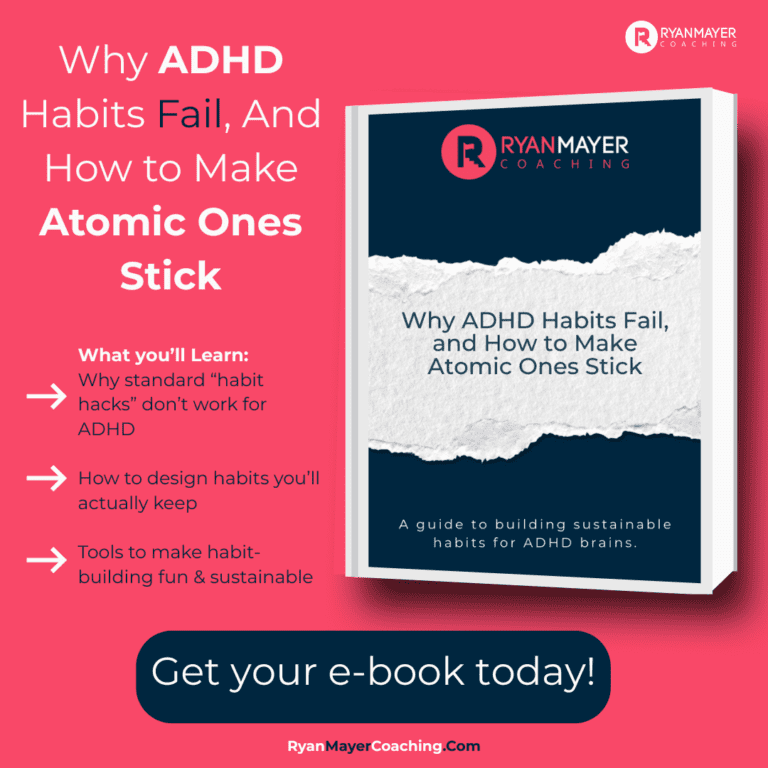
That is exactly why the eBook Why ADHD Habits Fail and How to Make Atomic Ones Stick exists. It is not about being perfect. It is about building habits that are flexible enough to survive low energy days, busy weeks, and the interruptions of real life.
What You Will Learn Inside the ADHD Habits eBook
Inside the eBook, we break down how ADHD actually impacts habit formation and why traditional advice often sets people up to feel broken. You will learn how to design habits around energy and interest instead of pressure, how to make time and tasks visible so they stop slipping away, and how to rebuild self trust without relying on shame.
This approach creates habits that last because they are realistic, human, and supportive.
How to Stop Restarting ADHD Habits and Start Building What Works
You have tried pushing harder.
You have tried starting fresh.
You have tried convincing yourself you “should” be able to do this.
Now it is time to try a system built for your ADHD brain.
Grab your copy of Why ADHD Habits Fail and How to Make Atomic Ones Stick here
You are not behind.
You are building in a way that finally fits. 💙