If you have ADHD and feel exhausted from trying to succeed in environments that constantly work against how your brain functions, we hope that this specific post (and podcast episode) can bring you some peace of mind, knowing that you are not alone, and that we have strategies to share to make things just a little (or maybe a LOT) easier for you, especially at work!
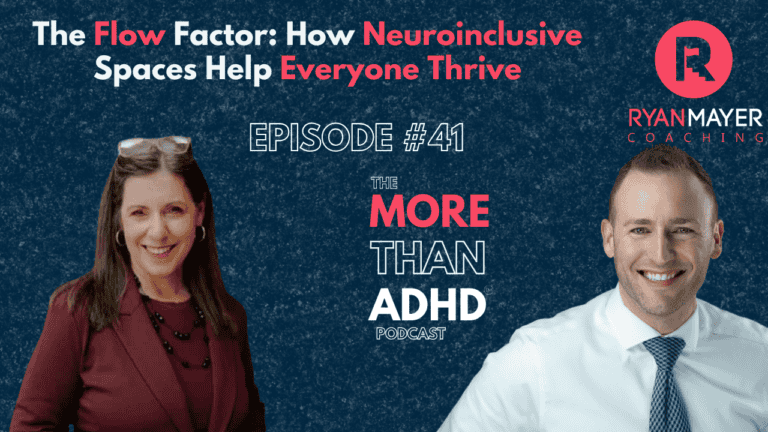
In Episode 41 of the More Than ADHD Podcast, titled The FLOW Factor: How Neuro Inclusive Spaces Help Everyone Thrive, Ryan Mayer welcomes back his friend and colleague Coach Jodi Davidson to explore why so many capable adults with ADHD feel burned out, overlooked, or stuck.
At the heart of this conversation is a simple truth: ADHD is not the problem. Contrary to what our automatic negative self-talk (and reinforcement from those around us) may lead us to think, it’s actually the environmental factors around us that is the source of the challenges for us. If you have ADHD and feel exhausted from trying to succeed in environments that constantly work against how your brain functions, this episode may feel like a deep exhale.
DOWNLOAD YOUR FREE ADHD GUIDE
ADHD Flow State Explained for Adults With ADHD
ADHD flow is often misunderstood as extreme focus or peak productivity.
In reality, ADHD flow is a state where
Time fades into the background
Self doubt quiets
Creativity increases
Energy feels sustainable rather than draining
Adults with ADHD are more likely to enter flow when work feels meaningful, flexible, and psychologically safe. Flow does not thrive in environments driven by micromanagement, urgency, or rigid expectations that ignore how ADHD brains operate.
This insight connects directly to what we see in ADHD burnout, a topic explored more deeply in Wired and Tired: ADHD Burnout, ADHD Sleep Struggles, and a Reset That Works, where chronic exhaustion is often the result of misalignment between brain and environment.
ADHD and Neuro Inclusive Work Environments
One of the most important insights from Episode 41 is that neuro inclusion does not lower standards. It improves outcomes.
Neuro inclusive, ADHD friendly environments allow
Multiple paths to the same outcome
Flexible timing paired with clear expectations
Supportive accountability rather than shame
A focus on results instead of rigid processes
When leaders and organizations adopt ADHD inclusive practices, adults with ADHD do not simply cope. They perform better, feel more engaged, and are more likely to stay.This reinforces why traditional productivity advice often fails ADHD brains, a concept explored further in Why ADHD Habits Fail and How to Make Atomic Ones Stick, which explains why systems must adapt to the ADHD brain rather than placing blame on the individual.
ADHD Peer Learning and Group Coaching Reduce Shame
A major theme throughout Episode 41 is the power of peer learning and group coaching.
Many adults with ADHD, especially those diagnosed later in life, carry years of internalized shame from being told they are too much, not enough, or doing things the wrong way.
ADHD peer learning helps by
Normalizing shared experiences
Reducing the ADHD shame spiral
Sharing practical strategies grounded in lived experience
Building momentum through small, meaningful wins
This is why group coaching and community are foundational at Ryan Mayer Coaching. Progress accelerates when adults with ADHD realize they are not alone.
The ADHD FLOW Framework
Coach Jodi Davidson introduces the ADHD FLOW framework as a way to describe how adults with ADHD build sustainable growth.
FLOW stands for
Fellowship Through Belonging
Psychological safety and connection reduce masking and burnout
Learning From Peers
Shared strategies and lived experience reduce shame
Ownership of Growth
Goals aligned with energy and values increase follow through
Wins That Build Momentum
Small wins reinforce confidence and habits over time
This framework reflects how adults with ADHD actually succeed.
Connection before correction.
Support before pressure.
Progress before perfection.
ADHD Self Worth Beyond Productivity
Episode 41 closes with a reminder many adults with ADHD need to hear regularly.
You are not defined by your job title.
Your worth is not measured by productivity.
You do not need to shrink to succeed.
When environments support how ADHD brains work, flow becomes possible again.